




















Does Gold-Plated Stainless Steel Jewellery Fade?
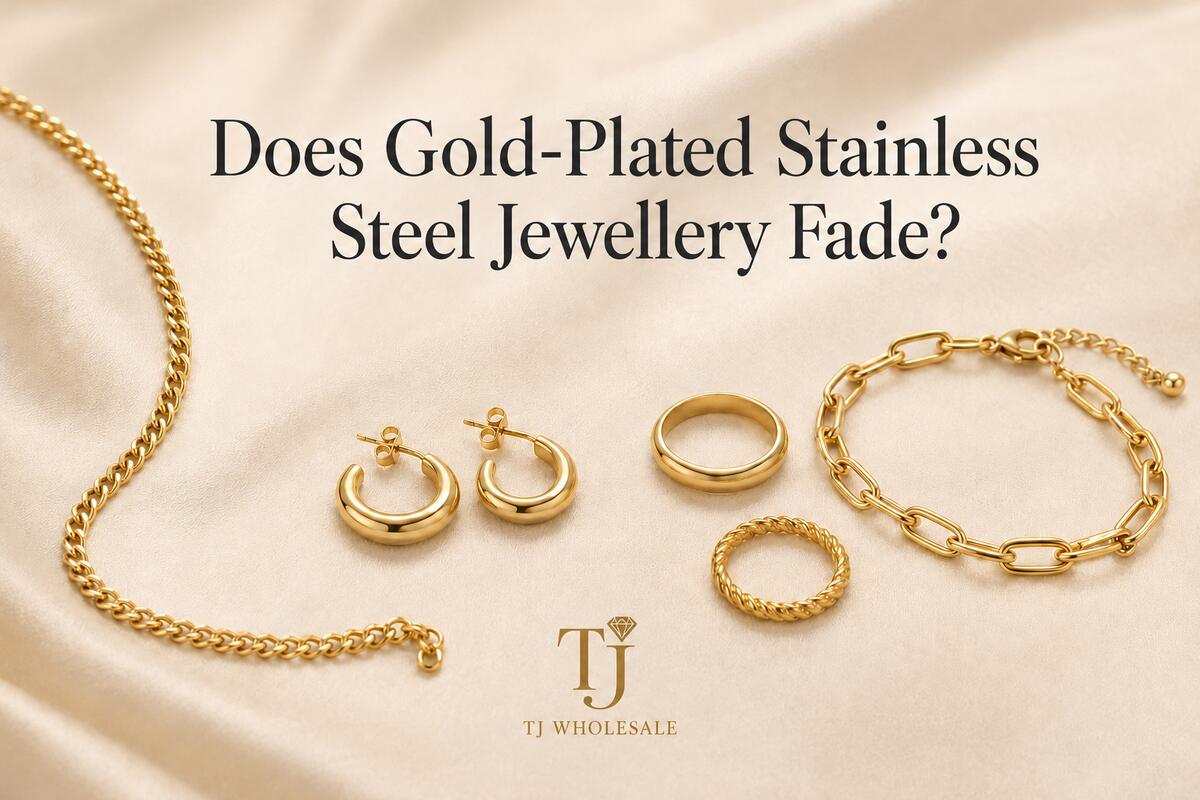
Gold-plated stainless steel jewellery offers the appearance of gold at a much more accessible price. It is also generally more durable than gold-plated jewellery made with many conventional base metals.
But does its gold colour eventually fade?
Yes, the gold-colour finish on stainless steel jewellery can gradually fade or wear away. The stainless steel underneath may remain resistant to rust and corrosion, but the gold colour is a surface coating. How long that finish lasts depends on the plating method, coating quality, friction, water, sweat, chemicals and how the jewellery is cared for.
This does not mean gold-plated stainless steel is unsuitable for regular wear. It means that “stainless steel” describes the underlying metal—not a guarantee that every coloured finish will remain unchanged forever.
Gold-Plated Stainless Steel Jewellery: Quick Answer
| Question | General answer |
|---|---|
| Can the gold colour fade? | Yes, the surface finish can gradually wear or lose colour |
| Does the stainless steel underneath tarnish easily? | Good-quality stainless steel is generally highly resistant to rust and tarnishing |
| Is PVD more durable than conventional plating? | Generally yes, although quality and thickness still vary |
| Can it handle sweat? | Usually better than conventional plated alloy jewellery, but repeated exposure can still affect the finish |
| Can it get wet? | Occasional water exposure may be tolerated, but chemicals, chlorine and prolonged soaking can shorten the coating’s life |
| Which pieces may fade sooner? | Rings and bracelets often experience more friction than earrings and pendants |
| Can proper care help? | Yes, gentle cleaning and reduced chemical exposure can help preserve the colour |
These are general guidelines rather than guarantees. Jewellery sold under the same broad description can use different steel grades, plating processes and coating thicknesses.
What Actually Fades on Gold-Plated Stainless Steel?
A gold-colour stainless steel piece normally consists of two main parts:
- A stainless-steel base
- A decorative gold-colour surface finish
The stainless-steel base gives the jewellery much of its strength and resistance to corrosion. The outer coating provides the gold appearance.
When people say that gold-plated stainless steel has “faded,” they are normally describing changes to this outer surface, such as:
- A lighter or less even gold colour
- Silver-colour steel becoming visible at contact points
- Dullness or reduced shine
- Scratches across the finish
- Colour loss around edges, clasps or the inside of rings
- Uneven colour in areas exposed to repeated friction
The steel underneath may still be structurally sound. This is an important difference between the gold finish wearing down and the base metal itself rusting or corroding.
For a broader explanation of stainless steel and tarnishing, read Does Stainless Steel Jewellery Tarnish?
Does Stainless Steel Keep Its Gold Colour Permanently?
Natural stainless steel has a silver or grey metallic appearance. Gold-colour stainless steel requires an additional coating or finishing process.
Therefore, the phrase “stainless steel” does not automatically mean that its gold colour is permanent.
Stainless steel contains chromium, which helps create a protective passive layer on the metal’s surface. This is what gives suitable stainless steel grades their characteristic resistance to corrosion. However, that protective behaviour relates primarily to the steel—not necessarily to every decorative coating placed over it.
The gold finish may last a long time when it is well applied and treated carefully, but it remains exposed to rubbing, moisture, skin oils, perfume, sanitiser and other substances during wear.
Claims such as “never fades” should therefore be treated cautiously unless they are supported by clearly stated product specifications, testing or a meaningful warranty.
For a clearer explanation of the terminology used in jewellery listings, read Anti-Tarnish Jewellery: Tarnish-Free vs Tarnish-Resistant.
PVD vs Conventional Gold Plating
Not every gold-colour stainless steel piece uses the same finishing method.
Two terms shoppers commonly encounter are conventional electroplating and PVD coating.
Conventional electroplating
Electroplating uses an electrical process to deposit a thin metallic layer onto the jewellery’s surface.
Its durability depends on factors including:
- Surface preparation
- Plating thickness
- Materials used
- Adhesion quality
- Protective top coating
- Manufacturing consistency
A very thin or poorly applied finish may show wear relatively quickly, particularly on jewellery exposed to frequent friction.
PVD coating
PVD stands for physical vapour deposition. It is a vacuum-based process used to deposit a thin coating onto a surface.
Well-applied decorative PVD coatings are generally valued for:
- Strong surface adhesion
- Improved resistance to scratching
- Better wear resistance
- A consistent decorative finish
- Longer colour retention than many basic electroplated finishes
However, “PVD” is not itself a lifetime guarantee. The coating material, thickness, surface preparation and everyday use still matter.
TJ Wholesale’s product range includes jewellery with different materials and finishes. Unless a particular product description states that it uses PVD, shoppers should not assume that every gold-colour stainless steel item uses this process.
How Long Does Gold-Plated Stainless Steel Last?
There is no honest universal answer such as six months, two years or five years.
Two visually similar pieces may retain their colour for different lengths of time because of differences in:
- Plating method
- Coating thickness
- Stainless-steel grade
- Frequency of wear
- Climate and humidity
- Skin chemistry
- Contact with sweat
- Perfume and cosmetic exposure
- Cleaning methods
- Friction
- Storage
A pendant worn occasionally may retain its finish longer than a ring worn every day. The ring repeatedly touches skin, desks, clothing, soap, water and sanitiser, while the pendant may experience much less direct abrasion.
Instead of relying on a fixed lifespan, consider the item’s material information and how you intend to wear it.
Does Sweat Make Gold-Plated Stainless Steel Fade?
Sweat does not normally cause all the gold colour to disappear after one use. However, repeated exposure may contribute to gradual surface wear.
This is particularly relevant in Pakistan, where jewellery may remain against warm or perspiring skin for long periods.
Sweat contains water, salts and other substances. Its effect on jewellery varies according to:
- The quality of the coating
- How heavily the wearer perspires
- How long the jewellery remains wet
- Whether it is wiped after use
- Products already present on the skin
- Friction between the jewellery and the body
Necklaces may experience wear around the back of the neck. Bracelets can rub against the wrist or desk, while rings are exposed to both perspiration and repeated hand contact.
Gold-plated stainless steel will generally be more practical around sweat than many delicate gold-plated alloy pieces, but it should still be cleaned and dried gently after heavy exposure.
Can Gold-Plated Stainless Steel Get Wet?
Gold-plated stainless steel can generally tolerate normal moisture better than many conventional plated base metals. However, the answer depends on the finish and the complete construction of the jewellery.
A brief splash is not the same as:
- Showering in the jewellery every day
- Swimming in chlorinated water
- Prolonged exposure to seawater
- Soaking it in cleaning solutions
- Repeated contact with soap or detergent
- Leaving it wet after use
Water may also affect stones, glue, enamel, pearls or other decorative components differently from the stainless-steel base.
For a detailed explanation of showers, rain, sweat and swimming, see Is Stainless Steel Jewellery Waterproof? What You Need to Know.
If the seller does not provide reliable information about the coating, removing the jewellery before showering or swimming is the safer way to preserve its colour.
What Makes the Gold Colour Fade Faster?
The following factors can accelerate visible wear.
Friction
Friction gradually affects surface coatings. Common high-contact areas include:
- The inside and underside of rings
- Bracelet edges
- Clasps
- Chain links
- Pendant loops
- The back of watches or jewellery touching the skin
- Pieces that rub against one another during storage
Perfume and cosmetics
Perfume, hairspray, lotion, makeup and other personal-care products may leave residue or interact with a decorative finish.
Apply these products before putting on your jewellery and allow them to dry where possible.
Hand sanitiser and cleaning chemicals
Rings and bracelets may be repeatedly exposed to sanitiser, detergent, bleach and household cleaners. These products can be harsher than ordinary water and may affect both the colour and shine.
Chlorine and seawater
Swimming pools and seawater create more demanding conditions than normal handwashing. Removing plated jewellery before swimming is generally the safest recommendation.
Abrasive cleaning
Scouring pads, rough brushes, toothpaste, polishing compounds and aggressive metal cleaners can scratch or thin a plated surface.
Poor storage
Jewellery stored together can rub and scratch. Humid storage conditions may also affect some finishes and decorative components.
Which Types of Jewellery Are Most Likely to Show Wear?
The item’s position on the body can affect colour retention.
Rings
Rings often show wear sooner because they encounter:
- Handwashing
- Soap and sanitiser
- Desk surfaces
- Bags and clothing
- Continuous skin contact
- Household work
The underside of the band is often one of the first areas to show colour change.
Bracelets and bangles
Bracelets and bangles move against the wrist and frequently touch tables, sleeves and other jewellery.
Necklaces and chains
Necklaces usually experience less direct impact than rings, but sweat, perfume and friction around the neck or clasp can still affect the finish.
Earrings
Earrings often experience less abrasion, particularly when they do not rub heavily against the skin or clothing. Their posts, backs and contact surfaces still need suitable care.
Pendants
Pendants may retain their appearance well when worn occasionally, although their loops and edges can experience friction against the chain.
How Can You Help the Gold Colour Last Longer?
You cannot make every surface finish permanent, but sensible care can reduce unnecessary wear.
- Put jewellery on after applying perfume, lotion, makeup and hairspray.
- Remove rings and bracelets before using cleaning chemicals.
- Avoid scraping pieces against hard or rough surfaces.
- Remove plated jewellery before swimming unless its specifications clearly support that use.
- Wipe away sweat and moisture with a soft cloth.
- Do not use abrasive brushes, toothpaste or harsh polishing products.
- Store items separately to prevent rubbing and scratches.
- Keep jewellery in a clean, dry place.
- Follow any product-specific care instructions.
- Give frequently worn pieces occasional rest rather than wearing them continuously.
For the complete cleaning routine, read How to Clean Stainless Steel Jewellery: Simple Care Guide.
How Should Gold-Plated Stainless Steel Be Cleaned?
For ordinary cleaning:
- Check whether the piece contains stones, glue, pearls or delicate decorative components.
- Wipe it gently with a soft, lint-free cloth.
- If more cleaning is needed, use a small amount of mild soap and lukewarm water.
- Avoid prolonged soaking.
- Rinse carefully where appropriate.
- Dry the jewellery completely with a soft cloth.
- Allow it to air-dry before storing.
Do not scrub aggressively. The objective is to remove sweat, oils and residue without unnecessarily abrading the coating.
If the jewellery has an unknown finish or delicate attached details, a gentle dry wipe may be safer than washing it.
Is Gold-Plated Stainless Steel Better Than Conventional Artificial Jewellery?
For regular use, a stainless-steel base generally provides better resistance to corrosion than many common alloy, brass or copper bases.
If the gold finish eventually becomes thin, the exposed stainless steel may remain clean and silver-coloured rather than reacting like some conventional base metals. However, results still depend on the actual construction and material quality.
Conventional artificial jewellery continues to offer advantages in elaborate designs, wedding styles and very low entry prices. Gold-plated stainless steel is often strongest in modern, casual and everyday designs.
Read our full comparison: Stainless Steel vs Conventional Artificial Jewellery: Which Is Better?
What Should You Check Before Buying?
Before buying gold-colour stainless steel jewellery, consider asking:
- Is stainless steel the main base metal or only one component?
- Is the steel grade stated?
- What type of gold-colour coating is used?
- Is the finish PVD or conventional plating?
- Is the coating thickness disclosed?
- Are stones glued or mechanically set?
- Are there product-specific water or care instructions?
- Is any colour warranty provided?
- Is the material description applicable to the entire piece?
Not every affordable item will provide detailed technical specifications. When information is limited, it is better to treat the jewellery as plated and care for it accordingly.
Should You Choose Gold-Colour or Silver-Colour Stainless Steel?
Choose gold-colour stainless steel if:
- You prefer the warm appearance of gold.
- You want an affordable alternative to solid gold.
- You are comfortable giving the surface finish reasonable care.
- The style suits your everyday or occasion wardrobe.
- You understand that the gold colour may gradually show wear.
Natural silver-colour stainless steel may be more practical if:
- Maximum colour stability is your priority.
- You frequently expose jewellery to water, friction or chemicals.
- You prefer jewellery that does not depend on a gold-colour surface coating.
- You want the simplest possible maintenance.
Neither choice is automatically better. The right one depends on your preferred colour, wearing habits and expectations.
Final Verdict: Does Gold-Plated Stainless Steel Fade?
Gold-plated stainless steel jewellery can fade because its gold colour comes from a surface finish. The stainless-steel base may remain strong and corrosion resistant even when the outer colour gradually wears at high-contact points.
A good-quality PVD finish will generally provide better wear resistance than basic decorative electroplating, but the term “PVD” should only be used when the product specification confirms it.
Pakistan’s heat, humidity and perspiration make coating quality and care particularly relevant. Friction, perfume, sanitiser, chlorine and harsh cleaning products may all shorten the useful life of a gold-colour finish.
Gold-plated stainless steel remains a practical and affordable option when expectations are realistic. Check the stated material, understand the finish and match the piece to how frequently you intend to wear it.
Browse TJ Wholesale’s stainless steel jewellery collection for rings, earrings, bracelets, necklaces, pendants and other designs available at wholesale prices. Individual customers, resellers and shopkeepers are all welcome.
Frequently Asked Questions
Does gold-plated stainless steel turn silver?
It can. If the gold-colour coating becomes thin or wears away, the natural silver-colour stainless steel underneath may become visible.
Does fading mean the stainless steel is damaged?
Not necessarily. Colour loss may affect only the decorative surface while the stainless-steel base remains structurally sound.
Is all gold-colour stainless steel PVD coated?
No. Different products use different finishing processes. Only treat an item as PVD coated when its specifications explicitly say so.
Does 18K gold plating mean it will not fade?
No. “18K” describes the stated gold composition or colour of the plating, not a permanent-colour guarantee. The application method, thickness and wear conditions still matter.
Can perfume fade gold-plated stainless steel?
Frequent direct contact with perfume and other cosmetic products may contribute to dullness or coating wear. Apply perfume before wearing jewellery and allow it to dry.
Is gold-plated stainless steel suitable for daily wear?
It can be suitable for regular wear, particularly when the finish is good quality. Daily exposure to friction, sweat, water and chemicals may still cause the colour to wear faster than occasional use.
Can faded gold-plated stainless steel be restored?
Professional recoating or replating may be possible, depending on the piece and whether the cost is worthwhile. Polishing should not be attempted casually because it may remove more of the remaining finish.