


















Is Stainless Steel Jewellery Waterproof? What You Need to Know
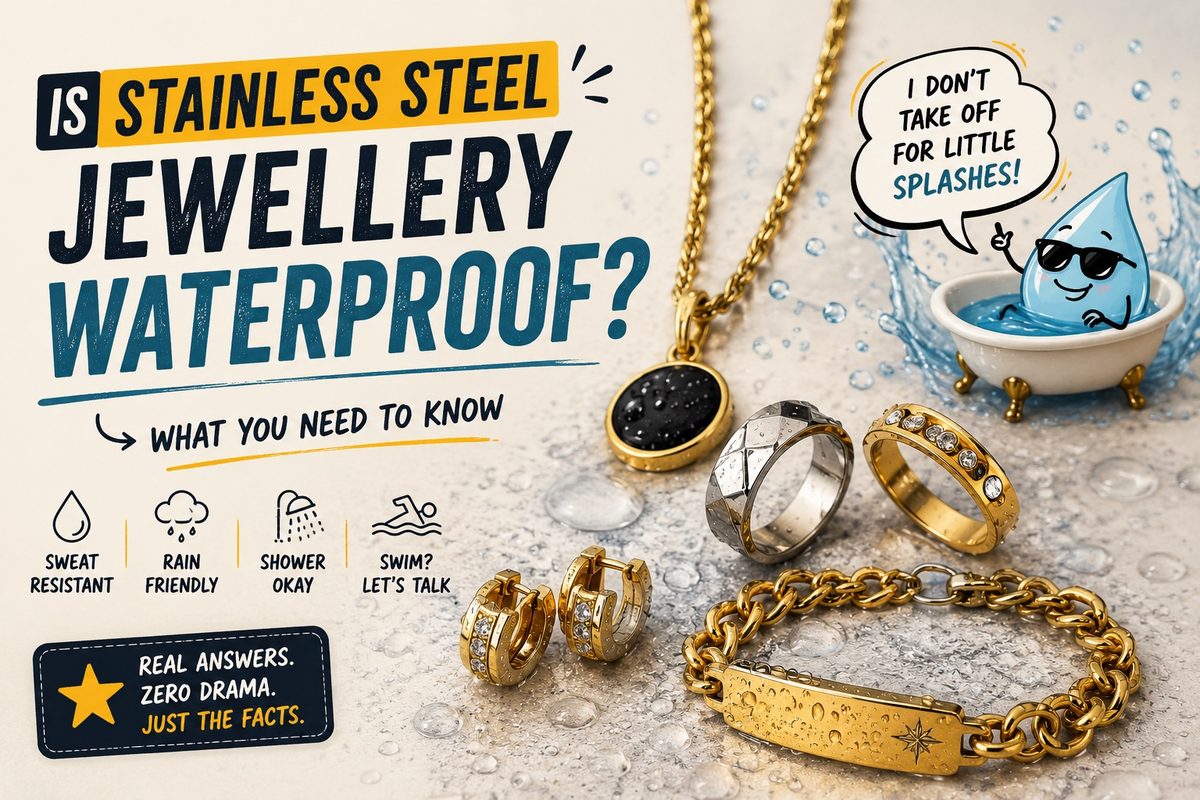
If you wear jewellery every day, taking off your rings, bracelet or necklace every time you wash your hands, get caught in the rain or start sweating can become annoying.
That’s one reason waterproof jewellery has become increasingly popular in Pakistan.
But is stainless steel jewellery actually waterproof?
The short answer is: good-quality stainless steel jewellery has excellent resistance to water and moisture and can handle normal everyday water exposure much better than many conventional fashion-jewellery materials.
However, the word waterproof is sometimes used too loosely in jewellery marketing. Getting your jewellery wet while washing your hands isn’t the same as repeatedly exposing it to swimming-pool chlorine, seawater or harsh chemicals.
You also need to distinguish between the stainless steel itself and any gold-colour finish, stones or other components used in the piece.
Here’s what that means for everyday wear in Pakistan.
Why Is Stainless Steel Jewellery So Resistant to Water?
The answer comes down to what makes stainless steel “stainless” in the first place.
Stainless steel contains chromium. When chromium comes into contact with oxygen, it creates a very thin protective layer over the surface of the metal.
This passive layer helps protect the steel underneath against moisture, rust and corrosion.
For jewellery, that means good-quality stainless steel can cope particularly well with things like:
- Washing your hands
- Rain
- Sweat
- Humidity
- Occasional splashes
- Normal everyday contact with water
This is closely related to stainless steel’s resistance to tarnishing, which we explain in our guide Does Stainless Steel Jewellery Tarnish?
Waterproof or Water Resistant – What’s the Difference?
This is where jewellery descriptions can become confusing.
You’ll commonly see terms such as:
- Waterproof jewellery
- Water-resistant jewellery
- Anti-tarnish jewellery
- Sweat-resistant jewellery
These terms are often used as if they mean exactly the same thing. They don’t.
Stainless steel has excellent corrosion and water resistance, but that doesn’t mean every finished piece of stainless steel jewellery should be treated as indestructible in every situation.
Think of it this way:
Getting your stainless steel ring wet while washing your hands is one thing. Wearing a plated ring in a chlorinated swimming pool every day is quite another.
At TJ Wholesale, we don’t use the word waterproof to mean that you can expose jewellery to anything without any care. We think it’s better for customers to understand what their jewellery can realistically handle.
Can You Wash Your Hands Wearing Stainless Steel Rings?
For normal hand washing, good-quality stainless steel rings can generally handle water very well.
You don’t need to worry because you forgot to remove your ring before turning on the tap.
The bigger issue with frequent hand washing may actually be what you’re using rather than the water itself.
Soap, hand wash, sanitiser and hand cream can gradually leave residue on jewellery and make a polished surface look less shiny.
So if your stainless steel ring starts looking slightly dull, that doesn’t automatically mean the metal has been damaged. Sometimes it simply needs cleaning.
You can read our guide on how to clean stainless steel jewellery at home for a simple care routine.
Can You Shower With Stainless Steel Jewellery?
This is probably one of the most common questions people have about waterproof jewellery.
The stainless steel itself generally copes very well with ordinary shower water.
But when you shower, your jewellery isn’t exposed only to water. It may also come into contact with:
- Shampoo
- Conditioner
- Body wash
- Soap
- Hair products
- Other cosmetics
These products can leave residue on jewellery, while repeated exposure may not be ideal for some decorative finishes.
So while getting stainless steel jewellery wet in the shower isn’t something we’d normally worry about, removing jewellery before showering is still the safer habit if you want to preserve its appearance for as long as possible, particularly for gold-colour or decorated pieces.
What About Gold-Plated Stainless Steel Jewellery?
This distinction is very important.
If you have gold-colour stainless steel jewellery, there are effectively two things to think about:
- The stainless steel underneath
- The gold-colour finish on top
The stainless steel base may have excellent water resistance, but the durability of the colour depends on how the finish has been applied.
PVD (Physical Vapour Deposition) coatings, for example, are generally more durable than conventional decorative electroplating. This is one reason PVD stainless steel has become popular for jewellery intended for frequent wear.
But even with a durable finish, friction, chemicals and the way you use the piece still matter.
So don’t assume that two pieces labelled “gold-plated stainless steel” will necessarily perform exactly the same.
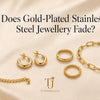
For a detailed comparison of PVD, conventional plating, sweat, water and friction, read Does Gold-Plated Stainless Steel Jewellery Fade?
Can You Wear Stainless Steel Jewellery While Sweating?
For Pakistan, this question may actually be more relevant than showering.
Think about an ordinary summer day in Lahore, Karachi, Multan or Islamabad. A necklace sitting against your neck or a bracelet around your wrist can be exposed to sweat for hours.
That’s where stainless steel has a real advantage for daily-wear jewellery.
Its corrosion resistance means it generally handles sweat and moisture much better than many inexpensive base-metal fashion-jewellery pieces.
Whether you’re wearing jewellery to university, the office or simply throughout the day, you don’t need to remove a stainless steel bracelet the moment you start sweating.
After a particularly hot day or a workout, however, wiping the piece with a clean, soft cloth before storing it is a sensible habit.
For a broader routine covering heat, sweat, showers, exercise, sleep and swimming, see our guide to stainless steel jewellery for daily wear in Pakistan.
Can You Swim With Stainless Steel Jewellery?
This is where we’d be more careful.
Swimming Pools
Swimming-pool water contains chlorine.
Stainless steel is corrosion resistant, but repeated exposure to chlorinated water is different from normal contact with tap water. The grade of stainless steel and the finish of the jewellery also matter.
If you accidentally jump into a pool wearing your stainless steel jewellery, there’s no reason to panic.
But we wouldn’t recommend making a habit of wearing jewellery in chlorinated swimming pools simply because it has been described as waterproof.
Sea Water
The same principle applies at the beach.
Stainless steel can have excellent corrosion resistance, but seawater contains salt and chlorides.
Again, occasional exposure and continuous exposure aren’t the same thing.
If you do wear stainless steel jewellery in the sea, rinsing it afterwards with fresh water and drying it properly is a good idea.
Does Stainless Steel Rust When It Gets Wet?
Under normal everyday conditions, good-quality stainless steel has excellent resistance to rust.
That’s one of its biggest advantages.
However, stainless steel isn’t one single material. Different grades have different compositions and different levels of corrosion resistance.
The environment matters too.
Ordinary tap water is very different from prolonged exposure to salt, chlorine or strong chemicals.
So we wouldn’t make an absolute claim such as “stainless steel can never rust.”
For everyday jewellery use, the more useful answer is:
Good-quality stainless steel is highly rust resistant and much better suited to regular moisture exposure than many common fashion-jewellery materials.
What Is 316L Stainless Steel?
If you’ve been looking at stainless steel jewellery online, you may have come across the term 316L stainless steel.
316L is a particular grade of stainless steel commonly used where good corrosion resistance is important.
One of its characteristics is the presence of molybdenum, which helps improve resistance to certain types of corrosion, including in environments containing chlorides.
That makes 316L particularly interesting for jewellery designed for frequent wear.
But there’s an important buying lesson here:
Don’t automatically assume that every product labelled “stainless steel” is 316L.
If the exact grade matters to you, check whether the seller actually specifies it.
Why Waterproof Jewellery Makes Sense in Pakistan
Water resistance isn’t just a marketing feature. It can be genuinely useful in our climate.
Everyday jewellery in Pakistan has to deal with:
- Long, hot summers
- Sweat
- Humidity
- Frequent hand washing
- Perfumes and cosmetics
- Regular everyday wear
Most people don’t want to keep taking off their jewellery every time there’s a little moisture.
This is particularly relevant for daily-wear jewellery — the ring you wear to university, the bracelet you keep on at work, or the necklace you wear throughout the day.
That’s where stainless steel makes sense.
It provides an accessible alternative for customers who want fashionable jewellery with better resistance to moisture and tarnishing than many conventional fashion-jewellery materials.
What About Price and Value for Money?
Durability matters, but price matters too — particularly in Pakistan.
Real gold is beyond the everyday jewellery budget of many customers, while conventional artificial jewellery remains attractive because of its low prices and huge variety of designs.
Stainless steel sits somewhere interesting between those choices.
It allows customers to buy fashionable everyday jewellery at accessible prices while getting the added benefit of greater resistance to water, sweat and tarnishing.
That can make stainless steel particularly good value for someone who intends to wear the same piece regularly rather than buying it for just one occasion.
See our complete comparison of stainless steel and conventional artificial jewellery for a closer look at durability, designs, care and longer-term value.
At TJ Wholesale, affordability is an important part of how we’re building our stainless steel assortment. Our aim is to offer customers a large choice of trendy stainless steel designs at competitive prices rather than turning stainless steel into a premium-only category.
For resellers and shopkeepers, the growing demand for water-resistant and tarnish-resistant jewellery in Pakistan also creates an increasingly interesting product category.
What We’re Seeing at TJ Wholesale
At TJ Wholesale, we’ve been selling fashion jewellery in Pakistan for years, and we’re seeing growing interest in pieces customers can wear more regularly.
Customers still want fashionable designs and affordable prices. But durability, water resistance and tarnish resistance are becoming increasingly important parts of the buying decision.
That’s one reason we’re investing heavily in stainless steel and rapidly expanding the number of designs available.
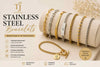
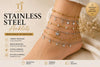
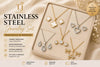
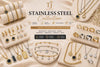
You can browse our complete stainless steel jewellery collection or explore individual categories including stainless steel rings, stainless steel bracelets, stainless steel necklaces and stainless steel earrings.
Our approach isn’t to tell customers that every piece is magically indestructible.
We’d rather explain what stainless steel is good at — and how a little sensible care can help you get the best out of your jewellery.
How to Look After Stainless Steel Jewellery Around Water
You don’t need a complicated care routine.
- Don’t worry about the occasional splash. Stainless steel is highly resistant to moisture.
- Dry jewellery before storing it. Particularly if it has been thoroughly wet.
- Wipe it after heavy sweating. This helps remove sweat and residue.
- Rinse after pool or sea exposure. Fresh water helps remove chlorine or salt left on the surface.
- Be careful with chemicals. Bleach and strong cleaning products are very different from ordinary water.
- Give plated pieces extra care. The base metal may be stainless steel, but the surface finish has its own durability.
- Keep it clean. Soap, cosmetics and other deposits can make jewellery look dull even when the metal itself is fine.
Frequently Asked Questions
Is stainless steel jewelry waterproof?
Good-quality stainless steel jewelry has excellent resistance to ordinary water and moisture, which is why it is commonly described as waterproof. However, the grade, plating, other components and type of water exposure all matter.
Can stainless steel jewellery get wet?
Yes. Good-quality stainless steel jewellery can handle normal everyday contact with water very well.
Can I wash my hands with a stainless steel ring?
Generally, yes. Ordinary hand washing shouldn’t be a problem for good-quality stainless steel. Soap, hand cream and other products can leave residue, though, so occasional cleaning is useful.
Can you shower with stainless steel jewelry?
The stainless steel itself generally handles ordinary shower water well. However, shampoos, soaps and other products can leave residue or affect some finishes, so removing plated or decorated jewellery is the more cautious option if you want to maximise its life.
Can you swim with stainless steel jewellery?
Occasional exposure isn’t necessarily a problem, but repeated exposure to chlorinated pool water or seawater is more demanding than ordinary tap water. Rinse and dry the jewellery afterwards and don’t assume “waterproof” means completely immune to chlorine or salt.
Is gold-plated stainless steel waterproof?
The stainless steel base has strong water resistance, but the durability of the gold-colour finish depends on the plating or coating method and its quality. Some finishes, including good-quality PVD coatings, can offer greater durability than conventional decorative plating.
Is stainless steel jewellery sweat resistant?
Good-quality stainless steel has excellent corrosion resistance and generally handles everyday sweat well, making it particularly useful for frequent wear in Pakistan’s climate.
Does stainless steel rust in water?
Quality stainless steel is highly resistant to rust under normal everyday water exposure. However, stainless steel grades differ, and aggressive environments involving chlorides, salt or strong chemicals can increase corrosion risk.
Is waterproof jewellery good for everyday wear in Pakistan?
It can be particularly useful here because everyday jewellery is regularly exposed to heat, sweat and humidity. Stainless steel’s resistance to moisture and corrosion makes it a practical option for regular wear.
Final Verdict: Is Stainless Steel Jewellery Waterproof?
For normal everyday use, good-quality stainless steel jewellery has excellent water resistance.
Washing your hands, getting caught in the rain or sweating during a Pakistani summer shouldn’t be treated the same way as exposing jewellery repeatedly to chlorine, seawater or harsh chemicals.
And if your jewellery is gold-coloured, remember that the stainless steel base and the decorative finish aren’t the same thing.
That’s why at TJ Wholesale we prefer a realistic explanation rather than simply stamping “100% waterproof” on everything.
If you’re looking for affordable jewellery that is better suited to moisture, sweat and regular wear than many conventional fashion-jewellery materials, stainless steel is one of the strongest options to consider.
Explore Stainless Steel Jewellery at TJ Wholesale
Explore our stainless steel range by category: