




















Anti-Tarnish Jewellery: Tarnish-Free vs Tarnish-Resistant
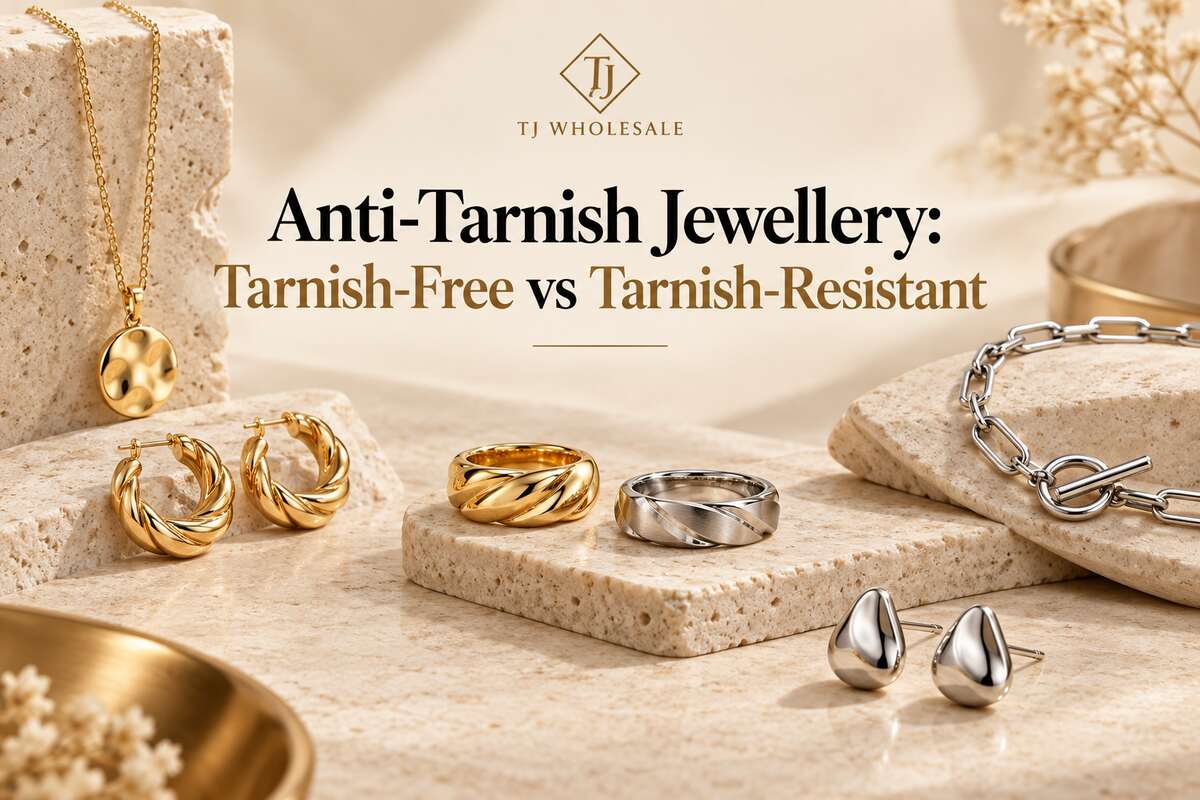
Anti-tarnish jewellery has become extremely popular in Pakistan, especially among shoppers looking for affordable jewellery they can wear more regularly.
But what does “anti-tarnish” actually mean? Is tarnish-free jewellery guaranteed never to change colour? And is tarnish-resistant jewellery somehow less durable?
The simple answer is:
Anti-tarnish, tarnish-free and tarnish-resistant all suggest that a jewellery piece is designed to resist discolouration better than ordinary fashion jewellery. However, these words should not automatically be treated as a guarantee that the jewellery will remain completely unchanged forever.
The actual performance depends on the base metal, coating, plating quality, surface finish, exposure to water and chemicals, friction and how the jewellery is cared for.
Quick Comparison
| Term | What it generally suggests | What it does not prove by itself |
|---|---|---|
| Anti-tarnish jewellery | Jewellery intended to resist tarnishing through its material, coating or protective finish | Exact material, coating method or permanent colour |
| Tarnish-resistant jewellery | Jewellery that is less likely to tarnish quickly under normal conditions | Complete immunity from tarnishing or wear |
| Tarnish-free jewellery | A strong commercial claim suggesting very high resistance to tarnishing | That the piece can never fade, scratch or change under any conditions |
| Waterproof jewellery | Jewellery intended to tolerate water exposure | That every coating, stone, glue or decorative component is unaffected by water |
| Stainless steel jewellery | Jewellery made mainly from a corrosion-resistant steel alloy | That every coloured finish is permanent or every item uses the same steel grade |
These terms can be useful, but the complete product description is more important than any single label.
What Is Tarnish?
Tarnish is a surface change that occurs when a metal reacts with substances in its environment.
Depending on the metal, this may produce:
- Dullness
- Darkening
- Yellowing
- Uneven colour
- Reduced shine
- Black or grey patches
- Other visible surface discolouration
Moisture, air, perspiration, sulphur compounds, cosmetics and chemicals may all contribute to tarnishing in susceptible metals.
Tarnish is not always the same as rust. Rust is a particular form of corrosion commonly associated with iron. Jewellery can lose shine or change colour without developing the reddish-brown rust people normally imagine.
For a more detailed explanation of stainless steel and tarnishing, read Does Stainless Steel Jewellery Tarnish?
What Does Anti-Tarnish Jewellery Mean?
“Anti-tarnish jewellery” is a broad commercial description rather than a complete material specification.
A jewellery piece may be described as anti-tarnish because of:
- A corrosion-resistant base metal such as suitable stainless steel
- A protective surface coating
- A particular plating process
- A clear protective layer
- A PVD finish
- A combination of the base metal and outer finish
The term alone does not tell you which method has been used.
Two pieces can both be marketed as anti-tarnish while having very different materials, coatings and expected performance. One might use stainless steel with a durable coloured finish, while another might use a conventional alloy with a thin protective coating.
That is why shoppers should look beyond the headline claim and check the stated material and finish.
Tarnish-Free vs Tarnish-Resistant: What Is the Difference?
In ordinary jewellery marketing, these terms are often used interchangeably. However, their wording creates different expectations.
Tarnish-resistant jewellery
“Tarnish-resistant” is generally the more realistic description.
It means that the jewellery should resist tarnishing better than a more reactive or unprotected material under normal use. It does not mean that the piece is indestructible.
Its appearance may still be affected by:
- Harsh chemicals
- Chlorine
- Seawater
- Heavy perspiration
- Repeated friction
- Perfume and cosmetics
- Abrasive cleaning
- Poor storage
- Wear to an outer coating
Tarnish-free jewellery
“Tarnish-free” sounds more absolute. Shoppers may interpret it as meaning that the jewellery can never change colour.
In practice, the phrase does not tell you:
- What the base metal is
- Which steel grade is used
- Whether the colour is natural or plated
- Which coating method is used
- How thick the coating is
- Whether the jewellery has been tested
- What exposure conditions it can tolerate
- Whether any colour warranty is provided
A good-quality piece may retain its appearance for a long time, but “tarnish-free” should still be read together with its material information and care instructions.
Anti-tarnish jewellery
“Anti-tarnish” sits somewhere between the two. It suggests that the jewellery has been made or treated to resist tarnishing, but it does not define a universal level of performance.
The most useful question is not simply, “Is this anti-tarnish?”
It is:
What material and finish make this piece resistant to tarnishing?
Tarnish, Fading and Plating Wear Are Not the Same
People often use the word “tarnish” for every jewellery colour change, but several different things may be happening.
Tarnishing
The metal reacts with substances in the environment, creating a visible surface layer or discolouration.
Plating wear
An outer decorative layer gradually becomes thinner because of friction, chemicals or regular use. The different-coloured metal underneath may become visible.
Fading
The jewellery’s colour becomes lighter, duller or uneven. This may relate to coating wear rather than tarnishing of the base metal.
Rust or corrosion
The metal itself experiences chemical deterioration. Suitable stainless steel is highly resistant to this under ordinary conditions, although resistance varies by grade and environment.
Green marks
Some copper-containing jewellery may leave greenish marks on the skin. This is a reaction involving the metal, moisture and skin chemistry and is not the same as ordinary surface tarnish.
Understanding these differences helps explain why a gold-colour stainless steel piece may lose some colour even though the stainless-steel base remains clean and structurally sound.
For more detail about coloured finishes, read Does Gold-Plated Stainless Steel Jewellery Fade?
Is Stainless Steel Jewellery Anti-Tarnish?
Good-quality stainless steel is naturally highly resistant to rust, corrosion and tarnishing.
Stainless steel contains chromium, which helps form a very thin protective layer on its surface. This passive layer protects the metal underneath and can make stainless steel much more practical for regular use than many conventional jewellery alloys.
However, not every stainless steel product is identical.
Performance can vary according to:
- Steel grade
- Manufacturing quality
- Surface preparation
- Plating or coating
- Decorative components
- Exposure conditions
- Care
Natural silver-colour stainless steel does not depend on gold-colour plating for its appearance. Gold, rose-gold or other coloured stainless steel normally requires an additional surface finish, and that finish may behave differently from the steel underneath.
Therefore, stainless steel can provide an excellent anti-tarnish base without making every decorative coating permanent.
What About Gold-Plated Anti-Tarnish Jewellery?
Gold-plated anti-tarnish jewellery has two separate elements:
- The base metal
- The gold-colour surface finish
If the base is stainless steel, it may remain highly resistant to corrosion even if the outer gold colour gradually wears at high-contact points.
The durability of the gold finish depends on factors including:
- Coating method
- Surface preparation
- Coating thickness
- Adhesion
- Friction
- Water and chemical exposure
- Frequency of wear
- Cleaning method
PVD coatings are generally known for better adhesion and wear resistance than many basic decorative electroplated finishes. However, shoppers should not assume that every gold-colour stainless steel product is PVD coated unless the product specification says so.
Similarly, “18K gold plated” does not by itself mean that a piece can never fade. It describes the stated gold content or colour of the outer layer, not a permanent-colour guarantee.
Is Sterling Silver Tarnish-Free?
Sterling silver is valuable and widely used in jewellery, but it can naturally tarnish.
Sterling silver normally contains silver combined with another metal to improve its strength. Exposure to sulphur-containing substances in the air and environment can cause darkening over time.
This does not necessarily mean that sterling silver is poor quality. Tarnishing is a known characteristic of silver and can often be cleaned using a suitable method.
A product made from sterling silver may use an additional protective or rhodium-plated finish to reduce tarnishing, but the exact construction should be checked.
Is Conventional Artificial Jewellery Anti-Tarnish?
Some conventional artificial jewellery can be described as anti-tarnish when it has a suitable protective coating or finish.
However, artificial jewellery is a broad category. It may use:
- Brass
- Copper-based alloys
- Zinc alloys
- Mixed metals
- Stainless steel
- Silver plating
- Gold-colour plating
- Rhodium plating
- Clear protective coatings
The phrase “artificial jewellery” does not identify one specific base metal or level of durability.
A well-finished conventional alloy piece may retain its appearance well when worn occasionally and stored carefully. A poorly applied coating may show wear much sooner.
This is why product-level information matters more than broad category labels.
Does Anti-Tarnish Jewellery Ever Fade?
Yes, some anti-tarnish jewellery can still fade or show wear.
Tarnish resistance and colour retention are related, but they are not exactly the same thing.
A corrosion-resistant base metal may remain in good condition while a coloured surface finish gradually becomes thinner. This is particularly common at areas exposed to repeated contact, such as:
- The underside of rings
- Bracelet edges
- Chain clasps
- Pendant loops
- The back of earrings
- Areas rubbing against skin or clothing
Anti-tarnish should therefore not be interpreted as scratch-proof, friction-proof or permanently colour-proof.
Can Anti-Tarnish Jewellery Get Wet?
The answer depends on the complete construction of the piece.
Suitable stainless steel generally handles ordinary water exposure much better than many common artificial jewellery materials. However, a complete jewellery piece may also contain:
- Gold-colour plating
- Stones
- Glue
- Enamel
- Pearls
- Thread
- Elastic
- Springs
- Clasps made from another metal
A brief splash is also different from repeated showering, swimming or prolonged soaking.
Water itself may not immediately damage a good-quality piece, but chlorine, salt, soap, shampoo and other chemicals can create more demanding conditions.
For a complete explanation, see Is Stainless Steel Jewellery Waterproof? What You Need to Know.
When product specifications are unclear, removing jewellery before showering or swimming is the safer way to preserve its appearance.
Pakistan’s Heat, Humidity and Perspiration
Anti-tarnish claims are especially relevant in Pakistan because jewellery is frequently exposed to heat, humidity and perspiration.
A necklace may remain against a perspiring neck for several hours. Bracelets rub against the wrist and desk, while rings encounter sweat, water, soap and sanitiser throughout the day.
The effect depends on:
- The wearer’s skin chemistry
- How heavily they perspire
- The jewellery material
- The type of coating
- How long the piece remains wet
- Whether it is cleaned after wearing
- Friction against the skin or clothing
Stainless steel is popular for everyday jewellery partly because it generally handles these conditions better than many inexpensive base-metal pieces.
Even so, wiping jewellery after a hot day and allowing it to dry before storage remains a sensible habit.
What Can Make Anti-Tarnish Jewellery Change Faster?
The following factors may shorten the life of a finish or accelerate visible discolouration.
Perfume, lotion and cosmetics
These products can leave residue or interact with a decorative coating. Apply them before wearing jewellery and allow them to dry where possible.
Hand sanitiser
Rings and bracelets can be repeatedly exposed to alcohol, fragrance and other sanitiser ingredients.
Cleaning chemicals
Bleach, detergents and household cleaners can be much harsher than ordinary water. Remove jewellery before cleaning.
Chlorine and seawater
Swimming pools and seawater create more aggressive conditions than normal tap water.
Friction
Rings, bracelets and bangles generally experience more surface contact than earrings or occasional-wear pendants.
Abrasive cleaning
Toothpaste, scouring pads, rough brushes and harsh polishing compounds may scratch or remove part of a plated finish.
Humid storage
Storing jewellery while damp or in a humid place can affect susceptible metals and decorative components.
Contact between pieces
Jewellery stored together can rub, scratch and damage surface finishes.
How to Check an Anti-Tarnish Claim Before Buying
Before purchasing, consider checking:
- What is the base metal?
- Is stainless steel used throughout the piece?
- Is the steel grade stated?
- Is the natural metal colour visible, or is the piece plated?
- What type of coating or plating is used?
- Is the finish described as PVD?
- Are water-exposure instructions provided?
- Does the item contain glued stones or delicate components?
- Are care instructions available?
- Is any colour warranty offered?
- Does the anti-tarnish claim apply to the entire piece or only its main component?
Not every affordable jewellery item will include detailed technical specifications. When information is limited, treat the piece carefully rather than assuming that it can tolerate every type of exposure.
What Should Resellers and Shopkeepers Check?
Resellers should avoid repeating absolute supplier claims without understanding what supports them.
Before advertising an item as anti-tarnish, tarnish-free or waterproof, ask the supplier about:
- Base material
- Plating or coating method
- Steel grade, if relevant
- Water and sweat exposure
- Product-care requirements
- Colour warranty
- Any available testing or performance information
- Whether findings, clasps and decorative components use the same material
It is safer to say that a product is tarnish-resistant under normal use when that description is supported than to promise that it can never change colour.
Clear expectations can reduce customer complaints and help buyers choose pieces suitable for their intended use.
How to Care for Anti-Tarnish Jewellery
Even durable jewellery benefits from sensible care.
- Put jewellery on after applying perfume, lotion and makeup.
- Wipe away sweat and moisture after wearing.
- Remove rings and bracelets before using household chemicals.
- Avoid prolonged soaking unless the product specifications support it.
- Remove plated jewellery before swimming.
- Clean with a soft cloth rather than abrasive materials.
- Store pieces separately to prevent scratching.
- Keep jewellery in a clean, dry place.
- Allow washed jewellery to dry completely before storage.
- Follow product-specific instructions when available.
For a step-by-step routine, read How to Clean Stainless Steel Jewellery: Simple Care Guide.
Is Anti-Tarnish Jewellery Worth Buying?
Anti-tarnish jewellery can be a good choice if you want:
- Jewellery for regular wear
- Better resistance to dullness and discolouration
- Easier maintenance
- Better performance around normal sweat and moisture
- An affordable alternative to precious-metal jewellery
- Modern and versatile everyday designs
However, the words “anti-tarnish” should not be the only reason to buy.
Also consider:
- Material
- Finish
- Design
- Price
- Intended use
- Frequency of wear
- Care requirements
- Seller information
- Warranty, if available
A clearly described tarnish-resistant product is often more trustworthy than an unexplained claim that a piece will “never fade.”
Final Verdict: Tarnish-Free or Tarnish-Resistant?
“Tarnish-resistant” is generally the most realistic description because it communicates improved durability without suggesting that the jewellery is completely indestructible.
“Anti-tarnish” is a useful general term, but shoppers should check what material or coating supports the claim.
“Tarnish-free” is the strongest wording and should be treated carefully. It may describe jewellery with excellent resistance, but it does not automatically guarantee permanent colour under unlimited exposure to water, chemicals, sweat and friction.
The best anti-tarnish jewellery is not simply the piece with the strongest marketing claim. It is the piece with a suitable base material, a well-applied finish, clear product information and care requirements that match how you intend to wear it.
Browse TJ Wholesale’s growing stainless steel jewellery collection, including rings, earrings, necklaces, pendants, bracelets, anklets and sets available at wholesale prices. You do not need to purchase in bulk—individual customers can order even one piece.
Explore Stainless Steel Jewellery by Category
Looking for a particular type of stainless steel jewellery? Browse the dedicated collections:
- Stainless Steel Bracelets
- Stainless Steel Necklaces
- Stainless Steel Rings
- Stainless Steel Earrings
- Stainless Steel Pendants
- Stainless Steel Anklets & Payal
- Stainless Steel Jewellery Sets
Frequently Asked Questions
Does anti-tarnish mean the jewellery will never tarnish?
Not necessarily. It generally means the jewellery is designed to resist tarnishing better than ordinary jewellery materials. Its performance still depends on the material, finish, exposure and care.
Is tarnish-resistant better than anti-tarnish?
Neither term automatically proves better quality. Tarnish-resistant is simply the more cautious and realistic wording. Check the base metal and coating rather than judging only by the label.
Is tarnish-free jewellery waterproof?
Not automatically. Tarnish resistance and water resistance are related but separate properties. Stones, glue, plating and other components may react differently from the main metal.
Is stainless steel always anti-tarnish?
Good-quality stainless steel is highly resistant to tarnishing and corrosion. However, steel grades and finishes vary, and coloured coatings can still show wear.
Can anti-tarnish jewellery lose its gold colour?
Yes. The base metal may resist tarnishing while the gold-colour surface gradually wears because of friction, chemicals or repeated exposure.
Is anti-tarnish jewellery hypoallergenic?
Not automatically. Tarnish resistance does not prove that a product is suitable for every person with sensitive skin. Material composition and individual allergies still matter.
Can I wear anti-tarnish jewellery every day?
Many anti-tarnish pieces are suitable for regular wear, especially when made from good-quality stainless steel. Daily friction, sweat, sanitiser, water and chemicals can still affect the finish over time.
How should anti-tarnish jewellery be stored?
Keep it clean and dry, store pieces separately and avoid leaving jewellery in humid places or in direct contact with perfume, cosmetics and cleaning products.