



















Stainless Steel vs Conventional Artificial Jewellery: Which Is Better?
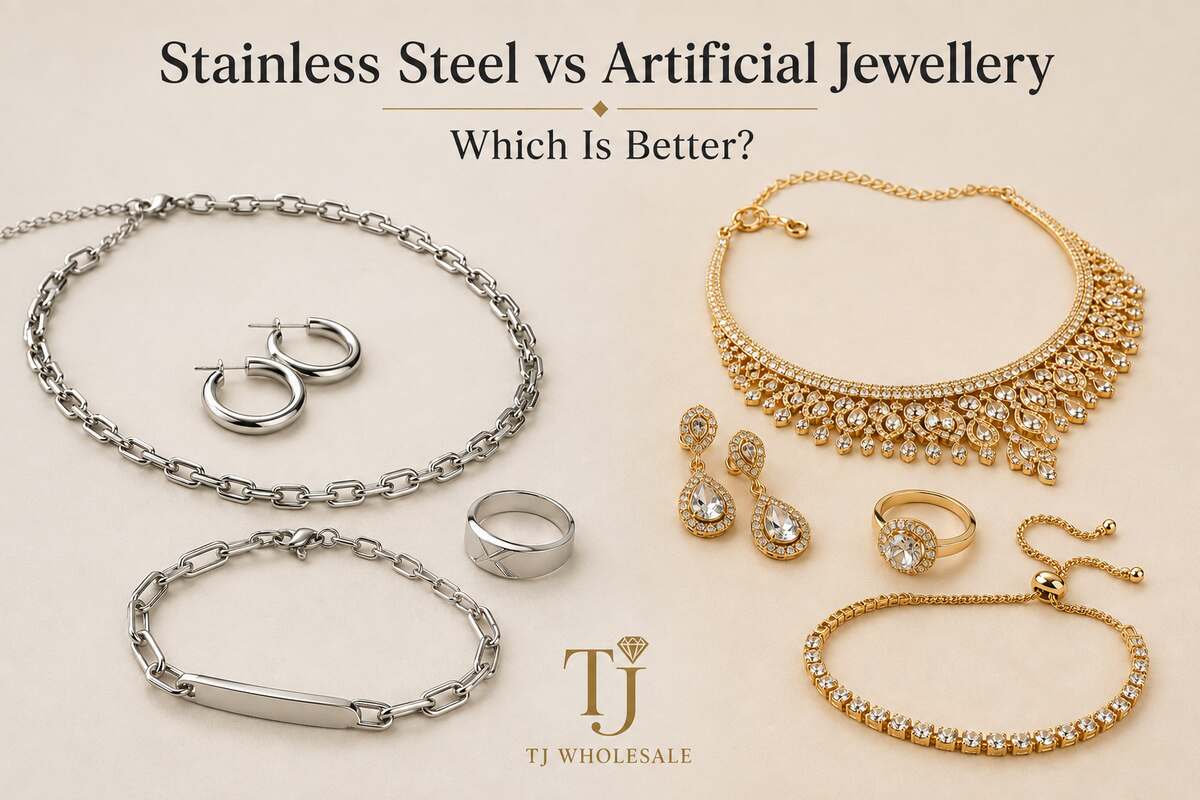
If you are buying affordable jewellery in Pakistan, you will often come across two broad choices: stainless steel jewellery and conventional artificial jewellery.
But this comparison needs a little clarification.
Stainless steel jewellery is technically also a type of artificial or fashion jewellery because it is not made from a precious metal such as solid gold. In this guide, conventional artificial jewellery refers to pieces commonly made from mixed alloys, brass, copper or similar base metals, usually covered with decorative plating or coating.
So, which is better?
For frequent everyday wear, stainless steel is generally the more practical choice because it usually offers better resistance to moisture, sweat, rust and tarnishing. Conventional artificial jewellery, however, may offer more elaborate designs, a lower starting price and more options for weddings, parties and occasional wear.
The right choice therefore depends on how often you plan to wear the jewellery, the type of design you want and how much care you are willing to give it.
Stainless Steel vs Artificial Jewellery: Quick Comparison
| Feature | Stainless Steel Jewellery | Conventional Artificial Jewellery |
|---|---|---|
| Base material | Stainless steel | May use alloy, brass, copper or another base metal |
| Tarnish resistance | Generally high | Varies considerably by metal and plating |
| Water and sweat resistance | Usually better for normal daily exposure | Often requires more protection from moisture |
| Durability | Strong and suitable for frequent wear | Depends heavily on construction and plating |
| Maintenance | Relatively easy to maintain | Usually needs more careful handling |
| Design variety | Strong in modern and everyday styles | Particularly strong in ornate and occasion-wear designs |
| Price | Affordable, but sometimes costs more initially | Often available at very low entry prices |
| Best suited for | Everyday and frequent wear | Trend-led, festive and occasional wear |
These are general differences rather than guarantees. Two pieces carrying the same label can perform differently because of their material quality, plating, construction and use.
What Is Stainless Steel Jewellery?
Stainless steel jewellery uses stainless steel as its main underlying metal.
Stainless steel contains chromium, which helps form a thin protective layer on its surface. This layer gives good-quality stainless steel its characteristic resistance to corrosion, rust and tarnishing.
That makes it well suited to jewellery exposed to the realities of everyday life in Pakistan, including:
- Heat and humidity
- Sweat
- Frequent hand washing
- Occasional rain or splashes
- Regular contact with the skin
- Repeated daily wear
Stainless steel jewellery is available in its natural silver colour as well as gold-tone, rose-gold and other finishes. When a coloured finish is applied, you need to distinguish between the durability of the stainless steel underneath and the durability of the coating on top.
The steel may remain in good condition even if an outer decorative finish gradually shows wear.
What Is Conventional Artificial Jewellery Made From?
“Artificial jewellery” is a broad commercial term rather than the name of one specific material.
A conventional artificial-jewellery piece might use:
- Mixed metal alloy
- Brass
- Copper
- Zinc-based alloy
- Another non-precious base metal
- Decorative gold-, silver- or rhodium-colour plating
It may also include cubic zirconia, synthetic stones, beads, enamel, pearls, glue or other decorative components.
Because the category includes so many materials and manufacturing methods, there is no single rule that applies to every piece of artificial jewellery.
Some well-made pieces can retain their appearance for a long time with proper care. Others may discolour relatively quickly when exposed to moisture, sweat, perfume or friction.
This variation is one of the main differences between buying jewellery with a clearly identified stainless steel base and buying jewellery described only as “alloy” or “artificial”.
Which Jewellery Is More Tarnish Resistant?
Good-quality stainless steel is generally more tarnish resistant than many conventional base metals used in low-cost artificial jewellery.
Its protective surface layer helps the underlying steel resist oxidation and corrosion under normal conditions. This does not mean every stainless steel piece is completely immune to wear, but it is one reason stainless steel has become popular for daily-use jewellery.
Conventional artificial jewellery depends more heavily on its plating or coating. Once that outer layer becomes thin or damaged, the base metal underneath may react with air, moisture, sweat or chemicals.
This can result in:
- Dullness
- Darkening
- Uneven colour
- Loss of shine
- Visible wear around edges and contact points
- Greenish marks in some copper-containing pieces
For a fuller explanation of how stainless steel behaves over time, read our guide: Does Stainless Steel Jewellery Tarnish?
Which Is Better Around Water and Sweat?
For normal everyday exposure, stainless steel generally handles water and sweat better than conventional artificial jewellery.
That is especially relevant in Pakistan, where jewellery may remain against the skin for hours during hot and humid weather.
Washing your hands while wearing a stainless steel ring or getting caught in light rain is normally less concerning than it would be with a delicate alloy-based plated ring. Stainless steel is also less likely to suffer the same rapid surface reaction associated with some common base metals.
However, “water resistant” should not be interpreted as indestructible.
Gold-tone coatings, stones, adhesives and other decorative components may not react exactly like the stainless steel underneath. Chlorinated swimming pools, seawater and strong chemicals are also more demanding than ordinary tap water.
Our detailed water-exposure guide explains these distinctions: Is Stainless Steel Jewellery Waterproof? What You Need to Know
Conventional artificial jewellery is usually safer when kept away from water, heavy sweat, perfume and cosmetics—unless the seller provides reliable information about its material and finish.
Which Is More Durable for Everyday Wear?
Stainless steel is a strong material and is generally well suited to frequent wear.
It can handle normal knocks, movement and daily use better than many delicate fashion-jewellery materials. This makes it particularly practical for items such as:
- Rings worn regularly
- Bracelets used at work or university
- Chains and necklaces worn throughout the day
- Simple earrings for routine use
- Pendants intended for casual outfits
Conventional artificial jewellery can also be durable, but the answer depends much more on the individual piece.
A heavy alloy necklace made for wedding wear may feel substantial, yet its plating, stones or glued decorative sections may still require careful handling. A lightweight trend-led piece may be affordable and attractive but not intended for continuous use.
Durability is therefore not only about whether the metal bends or breaks. It also includes how well the colour, polish, stones and overall appearance hold up.
If frequent use is your priority, our stainless steel daily-wear guide explains how to handle sweat, showers, sleep, swimming and simple everyday care.
Does Stainless Steel Jewellery Last Longer?
For regular daily use, good-quality stainless steel jewellery will generally retain its appearance longer than typical low-cost alloy jewellery.
This can make stainless steel better value over time even when its initial price is slightly higher.
But there are two important qualifications.
First, not all stainless steel jewellery uses the same grade or finish. If a seller does not specify a particular grade, you should not automatically assume that the item is 316L stainless steel.
Second, the coloured coating matters. Natural silver-colour stainless steel does not rely on gold-colour plating for its appearance. With gold-tone stainless steel, the coating method, thickness, friction and exposure to chemicals can all affect how long the colour lasts.
To understand how coating methods, friction, water and chemicals affect colour retention, read Does Gold-Plated Stainless Steel Jewellery Fade?
Which Is Better for Sensitive Skin?
Material information matters when you have sensitive skin, but neither category should be treated as universally safe for everyone.
Some stainless steel grades are widely used for jewellery and are often well tolerated. However, stainless steel can contain nickel, and individual sensitivities vary. A person with a known metal allergy should check the stated material or seek professional advice rather than relying only on broad claims such as “hypoallergenic”.
Conventional artificial jewellery can contain mixed metals, and the exact composition is not always stated. When plating wears down, the underlying metal may come into more direct contact with the skin.
Skin reactions can also be influenced by:
- Sweat and humidity
- Friction
- Perfume and cosmetics
- Nickel or other metal sensitivity
- Residue trapped underneath jewellery
- How long the jewellery is worn
If a piece causes itching, redness or persistent irritation, it is sensible to stop wearing it.
Which Offers Better Designs?
This is where conventional artificial jewellery retains a major advantage.
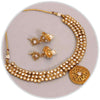
Artificial jewellery in Pakistan includes an enormous variety of:
- Bridal sets
- Kundan-inspired designs
- Polki-style jewellery
- Jhumkas
- Statement necklaces
- Traditional bangles
- Stone-studded pieces
- Festive and wedding jewellery
Mixed alloys and other commonly used materials make it possible to create large, intricate and heavily decorated designs at accessible prices.
Stainless steel jewellery is particularly strong in:
- Modern rings
- Chains and layered necklaces
- Minimalist pendants
- Everyday bracelets
- Hoops and contemporary earrings
- Western and casual jewellery
- Sleek gold-tone designs
The gap is narrowing as more stainless steel designs enter the Pakistani market, but conventional artificial jewellery still offers greater variety for ornate ethnic and occasion wear.
The decision does not have to be one or the other. Many shoppers may prefer stainless steel for everyday use and keep decorative artificial jewellery for weddings, Eid, parties and formal occasions.
Which Is More Affordable?
Conventional artificial jewellery often has the lowest initial price, particularly for trend-led or occasional pieces.
Stainless steel may cost slightly more than basic alloy jewellery because of the underlying material and manufacturing process. Even so, it remains far more accessible than solid gold and many precious-metal alternatives.
The more useful question is not simply, “Which one is cheaper?”
It is:
How much wear will I get from the amount I spend?
If you want a design for one event or to match a particular outfit, a lower-cost conventional artificial piece may make complete sense.
If you want jewellery that can be worn repeatedly through heat, sweat and normal daily activity, paying a little more for stainless steel may provide better long-term value.
Which Jewellery Is Easier to Maintain?
Stainless steel is generally easier to maintain.
For ordinary cleaning, mild soap, lukewarm water and a soft cloth are usually enough. Plated, stone-set or decorated pieces should still be handled gently.
You can follow the complete routine in our guide: How to Clean Stainless Steel Jewellery
Conventional artificial jewellery often needs more preventive care:
- Keep it dry where possible.
- Apply perfume and sprays before putting it on.
- Avoid direct contact with creams and cosmetics.
- Wipe it after use.
- Store pieces separately.
- Do not leave it exposed to humidity.
- Avoid aggressive cleaning and prolonged soaking.
Good care can extend the useful life of either type, but stainless steel is usually more forgiving.
When Should You Choose Stainless Steel Jewellery?
Stainless steel is likely to suit you better if:
- You want jewellery for frequent everyday wear.
- You regularly deal with heat, sweat or humidity.
- You prefer relatively low-maintenance jewellery.
- You want better resistance to tarnishing and rust.
- You like modern, western, minimalist or casual styles.
- You want an affordable alternative to precious-metal jewellery.
- You are willing to pay slightly more than the price of basic alloy jewellery for better durability.
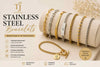
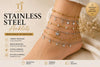
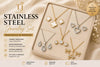
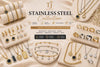
You can browse TJ Wholesale’s growing stainless steel jewellery collection, including:
When Does Conventional Artificial Jewellery Make More Sense?
Conventional artificial jewellery may be the better choice if:
- You need jewellery for a particular wedding or event.
- You want ornate ethnic or bridal styling.
- Your priority is the lowest possible initial price.
- You enjoy changing jewellery frequently with new trends.
- You do not plan to expose the piece to water or heavy sweat.
- You are comfortable giving it more careful handling and storage.
A piece does not need to last forever to be a worthwhile purchase. Its value depends on why you bought it and how you intend to use it.
Final Verdict: Stainless Steel or Artificial Jewellery?
Stainless steel jewellery is generally the better option for everyday durability, moisture resistance, tarnish resistance and easier maintenance.
Conventional alloy-based artificial jewellery remains highly relevant for ornate designs, traditional styling, special occasions, trend variety and lower entry prices.
For many Pakistani shoppers, the most practical jewellery collection may include both:
- Stainless steel for regular daily wear
- Conventional artificial jewellery for weddings, parties, festive outfits and occasional styling
The important thing is to understand what you are buying. Look beyond the colour and design, check the stated base material where possible and match the jewellery to how often—and under what conditions—you intend to wear it.